When it comes to choosing the right application tape tack level specifically for your vinyl or decal projects, understanding the tack level—whether low or high—is key. Tack simply refers to how sticky the adhesive on the tape is, and the right tack level can make or break the success of your application, especially in vinyl transfers. Most manufacturers tend to use standard-grade application tapes that typically don’t feature high tack adhesives, but there are cases where you might need something stronger or lighter.
MPI Matco supplies application tapes, transfers, and solutions for sign and graphics workflows, with product guidance backed by hands-on converting and testing support. If you are comparing high tack vs low tack application tape, this guide will help you choose faster with less trial and error.
Key Takeaways
- Small graphics usually require high tack tape to lift intricate lettering and fine details cleanly.
- Large graphics and digital prints usually perform better with low tack tape to reduce the risk of surface damage or difficult removal.
- When you are unsure, start with low tack because it is much easier to increase stickiness than to repair a damaged substrate.
- Always run a quick test strip by applying, squeegeeing, and peeling before committing to the full job.
- Delicate or textured surfaces, including wall wraps and frosted film, should be paired with low tack tape rather than high tack tape.
- Choosing the Right Tack Level for Your Application
- High Tack Tapes: Best for Sign Work and Plotter-Cut Lettering
- When to Avoid High Tack Tape
- Low Tack Tapes: Best for Large Graphics and Sensitive Surfaces
- Simple Guidelines for Choosing the Right Tack Level
- The 60 Second Tape Tack Test
- Common Problems and What They Usually Mean
- Frequently Asked Questions: Choosing Application Tape
- Conclusion
Choosing the Right Tack Level for Your Application
High Tack Tapes: Best for Sign Work and Plotter-Cut Lettering
High tack adhesives are ideal for most general sign applications and plotter-cut lettering. Their strong adhesive makes them perfect for transferring smaller, intricate designs where you need a tape that grips tightly. However, high tack tapes aren’t always the best choice for every job.
When to Avoid High Tack Tape
Here are a few situations where you might want to avoid using high tack adhesive tapes:
- Banner applications and medium-to-large lettering: For these, a medium tack or low tack application tape would be more appropriate. The stronger grip of high tack could cause damage to the material or make removal difficult.
- Large format digital prints: In these cases, it’s better to replace high tack tapes with low tack options to avoid causing any unwanted pressure or marks on the print.
- Transferring wall graphics or textured films: For delicate surfaces, such as frosted window films or textured materials, high tack tapes may be too aggressive. A low tack tape is a safer choice here, ensuring the transfer process goes smoothly without causing damage.
Low Tack Tapes: Best for Large Graphics and Sensitive Surfaces
Low tack application tape is typically the safest choice when you are working with large graphics or surfaces that can mark, stretch, or lift during transfer. It is commonly used for large-format digital prints, wall graphics, and films with sensitive or textured finishes, including frosted and textured vinyl. The goal with low tack is controlled contact, stable transfer, and clean release.
The tradeoff is pickup. If small details or fine lettering do not lift cleanly from the liner, low tack is usually not strong enough. In that case, move up to medium tack and retest, then step up again only if pickup is still the issue.
Why Many Professionals Struggle with Tack Levels
A common challenge for many sign makers and professionals is choosing the right tack level for their projects. Often, the wrong tape is selected, leading to unwanted results and frustration. But with a bit of guidance, you can avoid these mistakes and make the right decision for your tasks. Most problems come down to three variables: graphic size and detail, substrate sensitivity, and how much pressure and dwell time you use during transfer.
Use this quick reference to match your job to the right application tape tack level.
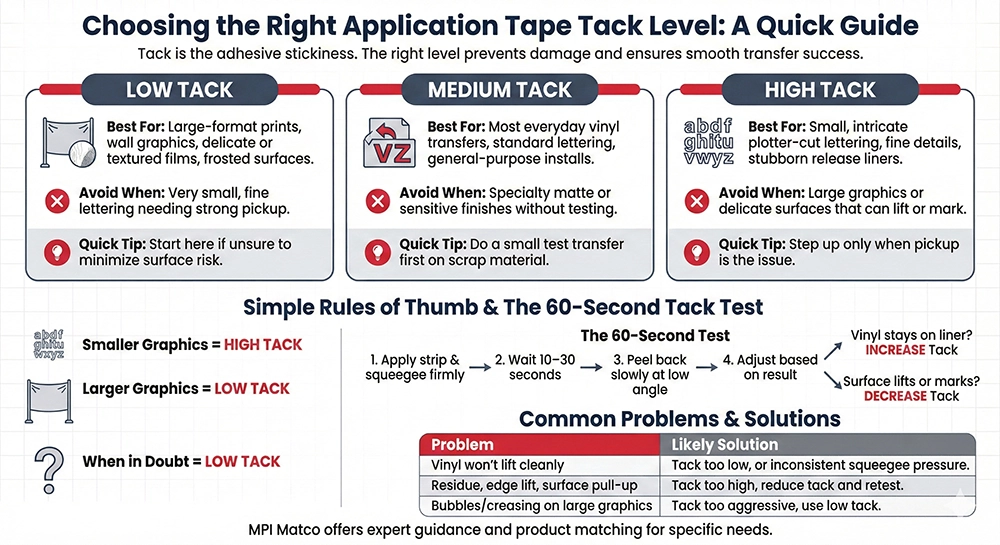
| Tack level | Best for | Avoid when | Quick tip |
| Low tack | Large-format prints, wall graphics, delicate films, textured or frosted surfaces | Very small lettering that needs strong pickup | Start here when you are unsure to reduce surface risk and retest after a short dwell time |
| Medium tack | Most everyday vinyl transfers, standard lettering, general-purpose installs | Specialty matte or sensitive finishes unless tested | Do a small test transfer first on scrap material and confirm clean removal |
| High tack | Small, intricate plotter-cut lettering, fine details, stubborn release liners | Large graphics or delicate surfaces that can lift or mark | Step up to high tack only when pickup is the issue and peel slowly at a low angle |
Simple Guidelines for Choosing the Right Tack Level
To make it easier, here are a few rules of thumb:
- Smaller graphics: Always opt for high tack tapes. The smaller the graphics, the stronger the adhesive needed to ensure a clean transfer.
- Larger graphics: For bigger designs, low tack tapes are the way to go. The larger the graphic, the less aggressive the adhesive should be to avoid damaging the surface or making the transfer difficult.
- When in doubt: If you’re unsure which tack level to choose, it’s always safe to start with low tack application tape. It will usually get the job done without the risk of damage. If the vinyl will not lift, move up one tack level and retest.
By following these basic guidelines, you’ll be able to choose the right application tape for your specific project with confidence, ensuring smoother results and a more efficient workflow. If you want a fast “application tape tack chart” decision, use the table above, then confirm with the 60-second test below.
The 60 Second Tape Tack Test
If you are not certain which tack level to use, run this quick test on a small sample before full production:
- Apply a short strip of application tape to a test graphic.
- Squeegee once firmly with consistent pressure.
- Wait 10–30 seconds (brief dwell time). This helps confirm real tack behaviour.
- Peel back at a low angle, slowly and evenly. Keep your peel method consistent from test to test so you are comparing tack level rather than technique.
- Adjust based on what you see:
- If the vinyl stays on the liner, increase tack. If you suspect pressure is the issue, retest with more consistent squeegee pressure before switching tapes.
- If the surface lifts, stretches, or marks, decrease tack and retest.
Common Problems and What They Usually Mean
- Vinyl will not lift cleanly from the liner: tack is likely too low, or squeegee pressure is inconsistent.
- Residue, edge lift, or surface pull-up: tack is likely too high for the substrate, reduce tack and retest.
- Bubbles/creasing on large graphics:tack is often too aggressive, use low tack for large-format transfers.
Frequently Asked Questions
Choosing Application Tape
How do I know if I need high tack or low tack application tape?
The choice depends on the size of your graphic and the sensitivity of the surface. Use high tack for small, intricate plotter-cut lettering that needs a strong grip to lift from the liner. Use low tack for large-format digital prints, wall graphics, or delicate films (like frosted or textured vinyl) to prevent over-stretching or damaging the substrate during removal. This is the core “high tack vs low tack application tape” decision.
What causes vinyl to stay on the liner instead of the application tape?
If your vinyl isn’t lifting, your tack level is likely too low for that specific film, or your squeegee pressure was inconsistent. Before increasing the tack level, ensure you are applying firm, even pressure. If the vinyl still won’t budge, step up to a medium or high tack tape to provide the necessary “grab” for a clean transfer.
Can high tack application tape damage my digital prints or wall graphics?
Yes, using a high tack tape on large digital prints or interior wall graphics can cause adhesive residue, surface tearing, or “ghosting” marks. Because these surfaces are often more sensitive or have a larger surface area for the adhesive to bond to, a low tack tape is the industry standard to ensure a safe, clean release without ruining the finished product.
What application tape tack level should I use for large-format prints?
In most cases, start with a low tack application tape tack level for large-format prints. Low tack is less aggressive across a big surface area, which helps reduce the risk of surface marking, stretching, edge lift, or difficult removal. If the print film does not transfer cleanly during your test strip, step up to medium tack and retest before considering high tack.
Conclusion
Choosing the right application tape tack level comes down to two variables: the size/detail of your graphic and how sensitive the application surface is. As a rule, start with low tack for large or delicate applications, and move up to higher tack only when you need stronger pickup for fine details. Use the 60-second test to confirm tack on your actual material before committing to the full run.
At MPI Matco, our team works with sign and graphics applications every day, and we routinely help customers match application tapes to real-world substrates and production conditions. If you want to reduce trial-and-error, send us your material details and we will point you to the most appropriate tack level.
Need help choosing the right application tape? MPI Matco team can recommend the most suitable tack level and product options for your process. Request a recommendation or Shop application tapes.