Pressure-sensitive adhesive tapes and specialty materials can be converted into custom die-cut components designed around specific manufacturing and assembly requirements. By providing material in the shape and format required for the application, die-cut parts can simplify installation, reduce manual handling, improve repeatability, and minimize unnecessary material waste.
From simple shapes to more complex constructions, MPI Matco converts pressure-sensitive tapes, foams, films, and other specialty materials into production-ready components for a wide range of industrial applications.
Why Use Die-Cut Components?

Improve Assembly Efficiency
Pre-cut components reduce manual cutting and material preparation during assembly.
Increase Repeatability
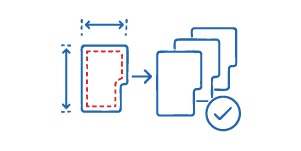
Consistent part dimensions help standardize material placement from one assembly to the next.
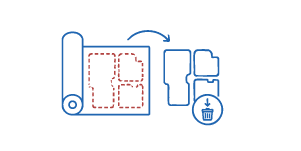
Reduce Material Waste
Part geometry and tooling layouts can be designed to improve material utilization during production.
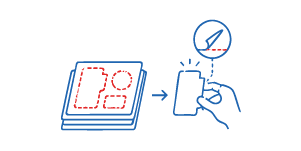
Simplify Application
Parts can be supplied in formats that make handling, positioning, and liner removal easier during assembly.
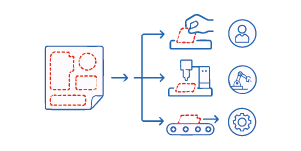
Support Production Processes
Custom part formats can be developed to support manual, semi-automated, or automated assembly requirements.
Die Cutting Capabilities
Adhesive Materials Converted to Fit Your Process
Die cutting transforms rolls or sheets of adhesive material into individual components with defined dimensions and geometry. Depending on the application, parts can range from simple circles, squares, strips, and gaskets to more complex shapes designed around a specific component or assembly.
MPI Matco can also combine die cutting with other converting processes, including laminating and custom liner configurations, to create components that are easier to integrate into the manufacturing process
The Die Cutting Process
Die cutting uses specialized tooling to cut adhesive tapes and other flexible materials into repeatable shapes. A die is manufactured according to the required part geometry and used to cut the material to the desired dimensions.
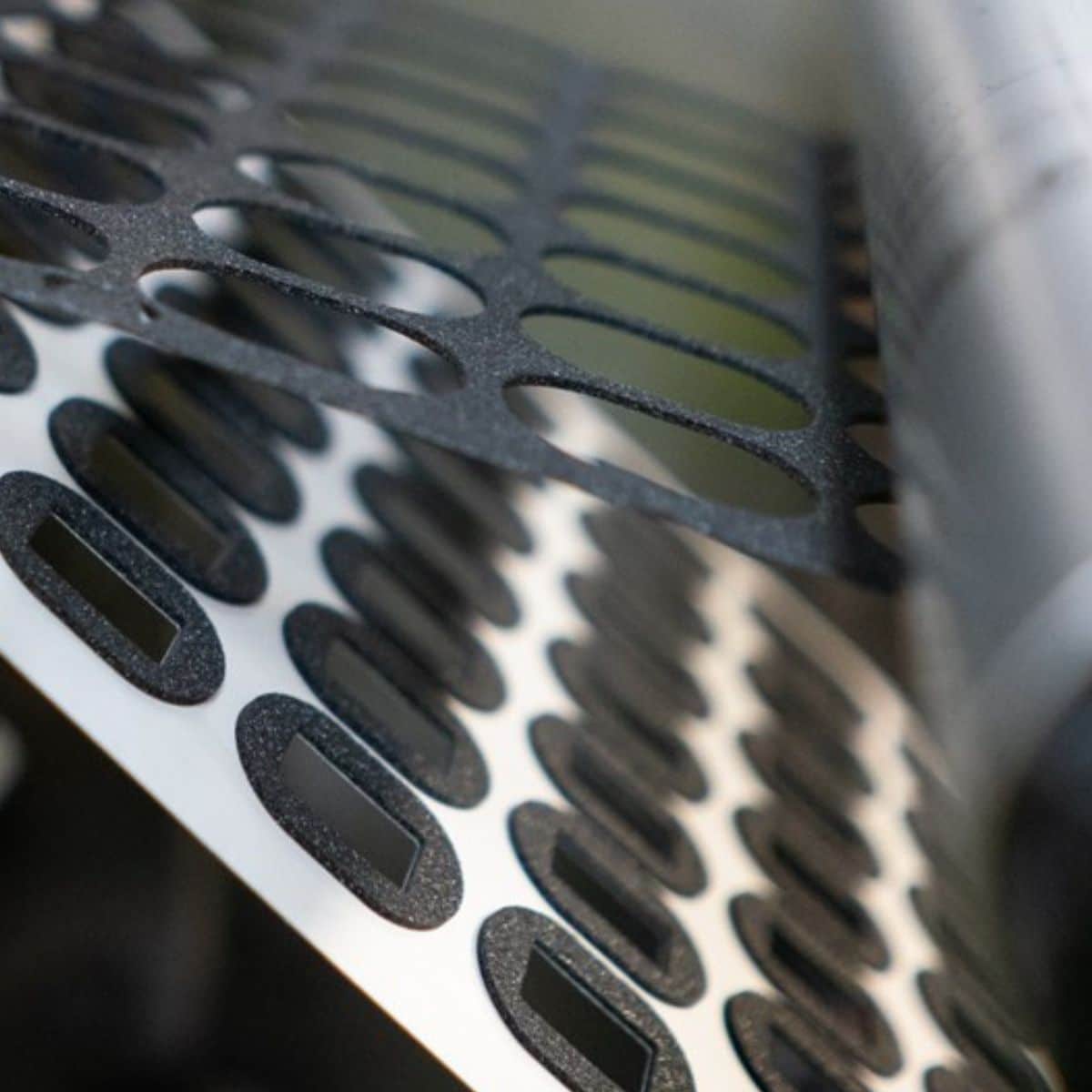
Depending on the construction, the tooling can be configured to cut through the entire material or selected layers while leaving the release liner intact. Single-layer materials and laminated constructions can both be processed depending on the part requirements.
Tooling layouts are also developed with material utilization in mind, helping produce consistent components while minimizing unnecessary waste.
Different die-cutting methods can be used depending on the material, part design, and production requirements
-
Kiss Cutting
Kiss cutting cuts through the adhesive material while leaving the release liner intact. This allows individual parts to remain positioned on the liner until they are removed for application. -
Flatbed Die Cutting
Flatbed die cutting uses shaped tooling mounted in a press to cut adhesive materials into the required geometry. This method provides flexibility for different part sizes, shapes, material thicknesses, and production quantities. -
Rotary Die Cutting
Rotary die cutting uses cylindrical tooling to continuously cut material as it moves through the equipment. This method is well suited for repeatable parts and higher-volume production requiremen
Die-Cut Components Designed for Manufacturing
The final construction of a die-cut component can be just as important as its shape. Additional converting features can be incorporated to simplify handling, liner removal, and application during assembly.

Extended Liners
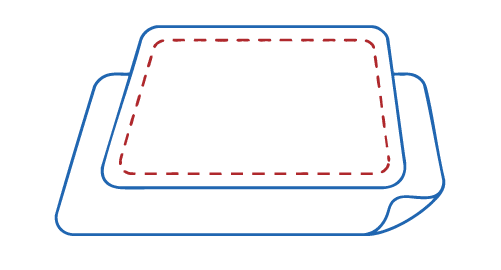
Extended or oversized liners provide additional handling area, making adhesive components easier to position and remove from the liner.
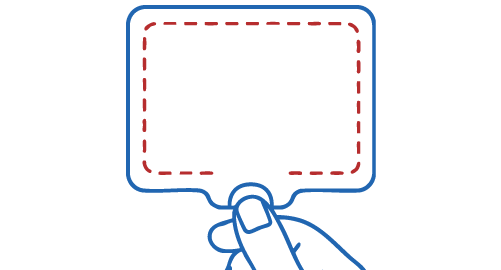
Tabs & Finger Lifts
Non-adhesive tabs provide an accessible area for liner removal, simplifying handling during assembly.
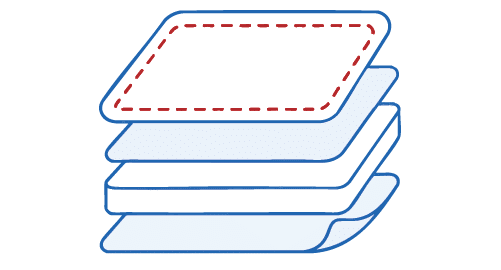
Multi-Layer Constructions
Different materials can be laminated and die cut together to create a single finished component with the
required construction.