What Is Powder Coating?
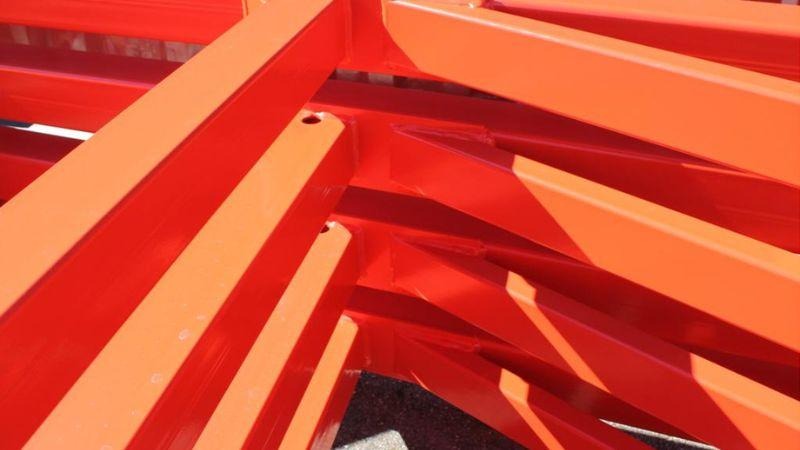
Powder coating is a type of coating that is applied as a dry powder. The powder is typically made up of a resin and a pigment, and it is applied to a surface using an electrostatic charge. Once the powder is applied, it is cured under high heat to create a smooth, durable finish. Powder coating is commonly used for automotive parts, architectural products, appliances, metal components, and other industrial parts that require a durable finish.
The Three Stages of Powder Coating
There are three main stages to the powder coating process:
- Surface preparation: The surface is cleaned before powder coating begins to remove contaminants that could affect the coating or tape adhesion.
- Powder application: The powder is applied using an electrostatic charge. Masking tape should already be in place to protect areas that need to remain free of coating.
- Curing: The powder is cured under heat. Because this takes place in an oven, the masking tape must tolerate the curing temperature and removal process.
Why Powder Coating Requires High-Temperature Masking Tape
Powder coating differs from standard liquid painting because the coating is applied as a dry powder and then cured by heat. During this process, masking tape may be exposed to oven temperatures, powder buildup, part handling, and post-cure removal.
Regular masking tape can soften, lift, curl, shrink, or leave adhesive residue when exposed to these conditions. This can affect the masked area, create uneven coating lines, contaminate functional surfaces, or add cleanup time after the part has been processed. That category includes high-performance crepe-paper masking tapes marketed for heat. At 194°F to 248°F, they suit spray booth drying cycles but fall well short of a powder cure.
High-temperature masking tape for powder coating is designed to stay in place during application and curing while protecting areas that should remain free of coating. These protected areas may include threaded holes, contact points, seams, edges, mounting areas, or other surfaces that must remain clean for assembly or performance reasons.
As a type of industrial pressure-sensitive tape, powder coating masking tape should be selected based on temperature resistance, adhesive performance, backing material, surface geometry, edge definition, and removal requirements.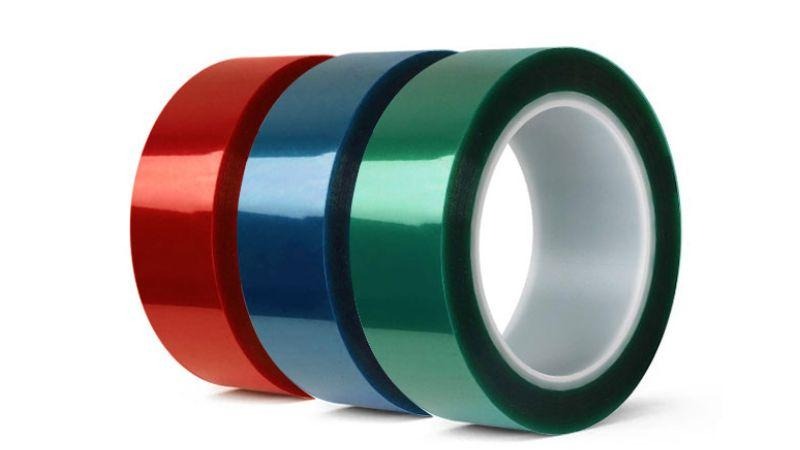
What to Look for in High-Temperature Masking Tape for Powder Coating
Masking tapes fall under the broader category of pressure-sensitive adhesive tapes. They are available in many constructions, adhesives, widths, and backing materials, which can make selection difficult.
For powder coating, high-temperature masking tapes are typically used because they are designed for heat exposure during the curing process. When properly selected, these tapes are designed to resist shrinking, curling, lifting, and adhesive breakdown during curing. They can also help create fine, clean coating edges when applied correctly.
Although temperature resistance is one of the main factors, several other conditions can influence the tape’s performance, including curing time, exposure time, adhesive type, backing material, surface shape, and the level of edge sharpness required.
Temperature Resistance
Choose a high-temperature masking tape that can withstand the temperatures used during the powder coating cure cycle. Some commonly used powder coating tapes can withstand temperatures up to 400°F (204°C), while more specialized options may handle temperatures up to 500°F (260°C).
Also consider how long the tape will be exposed to heat, not just the maximum oven temperature. A tape that performs well during a short exposure may not be the right choice for a longer cure cycle or repeated high-temperature processing.
Ask your supplier for the rating as a temperature and a time together. On its own, “400°F” does not tell you much. “400°F for 20 minutes” is something you can check against your own oven schedule.
Clean Removal
Clean removal is important after curing. If the adhesive breaks down during the process, it can leave residue on the part and create extra cleanup work.
Select masking tape with both the curing conditions and removal requirements in mind. This is especially important when the masked area must remain clean for assembly, bonding, electrical contact, threading, or another functional requirement.
Removal timing matters too. Tape generally releases most cleanly while the part is still warm from the oven, before the coating has fully hardened.
Edge Definition
High-temperature masking tapes are often used to create a clean boundary between coated and uncoated areas. Edge definition can be affected by tape thickness, backing material, application pressure, and how well the tape conforms to the surface.
For detailed masking, narrow lines, or areas where appearance matters, choose a tape that provides consistent contact along the edge during application and curing.
Adhesion to the Substrate
The tape must adhere properly to the surface being masked. Smooth metal surfaces, textured areas, curved parts, corners, and edges can all affect how well the tape bonds before the part enters the oven.
If the tape does not adhere properly, powder may reach areas that were meant to remain uncoated. Surface cleanliness and application pressure also play an important role.
Thickness and Conformability
High-temperature tapes are available in various thicknesses. The thickness of the coating being applied, the surface geometry, and the masking requirements can all influence which tape is most appropriate. Tape thickness and conformability also affect how easily the tape can be applied and how it performs during curing. A thicker tape may be useful in some masking situations, but it may not conform as well to tight curves or detailed shapes.
For complex parts, holes, slots, tabs, recessed areas, and repeated masking tasks, a converted or die-cut masking solution may be more consistent than manually trimming standard rolls.
Types of High-Temperature Masking Tape for Powder Coating
Several types of high-temperature masking tape may be used for powder coating and related finishing applications. Common options include polyester/PET masking tape, conformable polyester tape, PET/non-woven tape, polyimide tape, glass cloth tape, and specialty high-temperature masking tapes.
Temperature ratings vary by adhesive, backing material, exposure time, and cure conditions. The ranges below are general guidance only; always confirm product specifications before selecting tape for a specific powder coating process.
High-Temperature Polyester Masking Tapes
Polyester masking tapes, also referred to as PET masking tapes, are commonly used for powder coating applications because they provide a practical balance of heat resistance, clean removal, edge definition, and cost efficiency.
Many of these masking tapes are used in powder coating cure cycles around 400°F (204°C). They are often a strong starting point for flat surfaces, straight mask lines, general production masking, and applications where a clean coating edge is required.
Polyester masking tapes come in several colours. The colours identify the tape rather than grading it, since the construction is the same across them. This allows zones, shifts, or customers to be separated visually, and helps ensure nothing is overlooked at demask.
MPI Matco 8503 high-performance polyester tape is one example: 3.5 mil, rated −100°F to 392°F (−73°C to 200°C), 30 oz/in adhesion to steel, RoHS and REACH compliant.
When to Use Conformable Polyester Masking Tapes
Conformable polyester masking tapes are useful when part geometry makes standard polyester tape difficult to apply. Curves, edges, uneven surfaces, recessed areas, and more complex shapes may require a tape that can maintain surface contact without lifting or pulling back during curing.
This can be especially important when edge definition, clean removal, and consistent masking are still required, but a more rigid polyester film does not sit properly on the part.
High-Temperature Polyimide Masking Tapes
Many polyimide masking tapes use silicone pressure-sensitive adhesive, making them suitable for some high-temperature and other industrial masking applications. These tapes are known for their thin, conformable backing and ability to perform in higher-temperature environments.
Some polyimide masking tapes can tolerate temperatures around 500°F (260°C), and certain specialized versions may be rated higher for short-term exposure.
Polyimide tapes may be used for powder coating masking, overlap seam masking, and as a separation barrier between dissimilar metals, depending on the application requirements.
As an example, MPI Matco’s 7901 high-temperature polyimide tape has a thickness of 2.5 mil, is designed for temperatures ranging from −100°F to 500°F (−73°C to 260°C), offers 25 oz/in adhesion to steel, and is flame retardant.
PET / Non-Woven Masking Tapes
PET / non-woven masking tapes combine a polyester-based construction with a more flexible backing structure. They may be used for powder coating and other high-temperature masking applications where conformability, clean removal, or surface protection is important.
Some PET / non-woven masking tapes are designed for high-temperature processes in the range of 400°F to 500°F (204°C to 260°C). These tapes may be useful when the application requires more flexibility than a standard film tape while still needing resistance to heat during curing.
High-Temperature Glass Cloth Masking Tapes
Glass cloth masking tapes are made of fibreglass cloth backing with a silicone adhesive. They are typically used for more demanding powder coating applications. They offer strong heat resistance, with some options rated for temperatures up to 500°F (260°C), depending on product construction and exposure time. Their thicker backing can make them useful for heavier coatings, longer exposure times, abrasive handling conditions, or applications where added durability is required.
Because glass cloth tape is thicker than many polyester, PET, or polyimide tapes, it may be better suited to flatter surfaces or applications where conformability is less critical. It is often selected when durability and heat resistance are more important than fine-line flexibility.
Specialty High-Temperature Masking Tapes
Some applications may require specialty high-temperature masking tapes, such as silicone-free tapes, longer-exposure tapes, or tapes designed for higher coating weights. These options are typically selected when the application has a specific technical requirement beyond standard powder coating masking.
For example, silicone-free options may be considered where silicone contamination is a concern, while longer-exposure tapes may be useful when parts remain exposed to heat for extended periods.
If your process points toward a construction that is not in our catalogue, contact us. Sourcing to specification is part of what we do.
Comparison Table of High-Temperature Masking Tapes
| Tape type | Typical temperature rating | Best for | Selection note |
| Silicone polyester (PET) | ~390°F / 200°C continuous | General powder coating, e-coat, anodizing | Starting point for standard cure schedules. |
| Conformable polyester | ~390°F / 200°C continuous | Curves, edges, uneven and recessed surfaces | For geometry a rigid film will not sit on. |
| Polyimide | Up to 500°F / 260°C | Hot cures, fine detail, tight radii | Thinnest edge available. |
| PET / non-woven | 400°F–500°F / 204°C–260°C | Flexible masking and surface protection | Ratings vary widely; confirm per product. |
| Glass cloth | Up to 500°F / 260°C | Heavy coating builds, prolonged or repeated heat | Thicker backing, better on flatter surfaces. |
| Specialty / silicone-free | Application-specific | Downstream paint, bond, or weld; extended cures | Specified against a defined technical constraint. |
Common Powder Coating Tape Problems and What They Usually Mean
Even when the right type of high-temperature masking tape is selected, performance can still be affected by surface preparation, application method, cure conditions, and removal timing. If tape failure occurs during powder coating, the issue is not always the tape itself. It may also be related to how the tape was applied, the part geometry, or whether the tape was properly matched to the process.
The table below outlines common masking tape problems in powder coating applications and what to review before changing products.
| Problem | Possible cause | What to review |
| Tape lifts during curing | Surface contamination, insufficient pressure during application, tight curves, or the wrong adhesive system | Surface cleanliness, tape conformability, adhesive type, and application pressure |
| Adhesive residue remains after removal | Tape not suited to the cure temperature, exposure time, or removal conditions | Temperature rating, cure duration, adhesive type, and removal timing |
| Coating edges are uneven | Tape is too thick, poorly applied, or not making consistent contact with the surface | Tape thickness, edge contact, application pressure, and surface shape |
| Tape shrinks, curls, or pulls back | Backing material is not suited to the process temperature or exposure time | Backing material, cure temperature, and total heat exposure |
| Powder reaches masked areas | Gaps, lifted edges, poor surface contact, or difficult part geometry | Tape width, surface contact, die-cut options, and application method |
For recurring issues, it may be useful to review the full masking process rather than only replacing the tape. In production environments, small changes to tape format, width, shape, or application method can improve consistency and reduce rework.
Choosing the Right High-Temperature Masking Tape for Your Application
Choosing the right high-temperature masking tape for powder coating starts with your cure temperature, your cure duration, and what happens to the part afterward.
For straightforward masking work, a standard roll may be enough. For repeat production or complex parts, a converted tape format may help improve placement, reduce manual trimming, and make the masking process more consistent.
MPI Matco can help you select powder coating tape based on your process conditions, masking requirements, and production needs.