

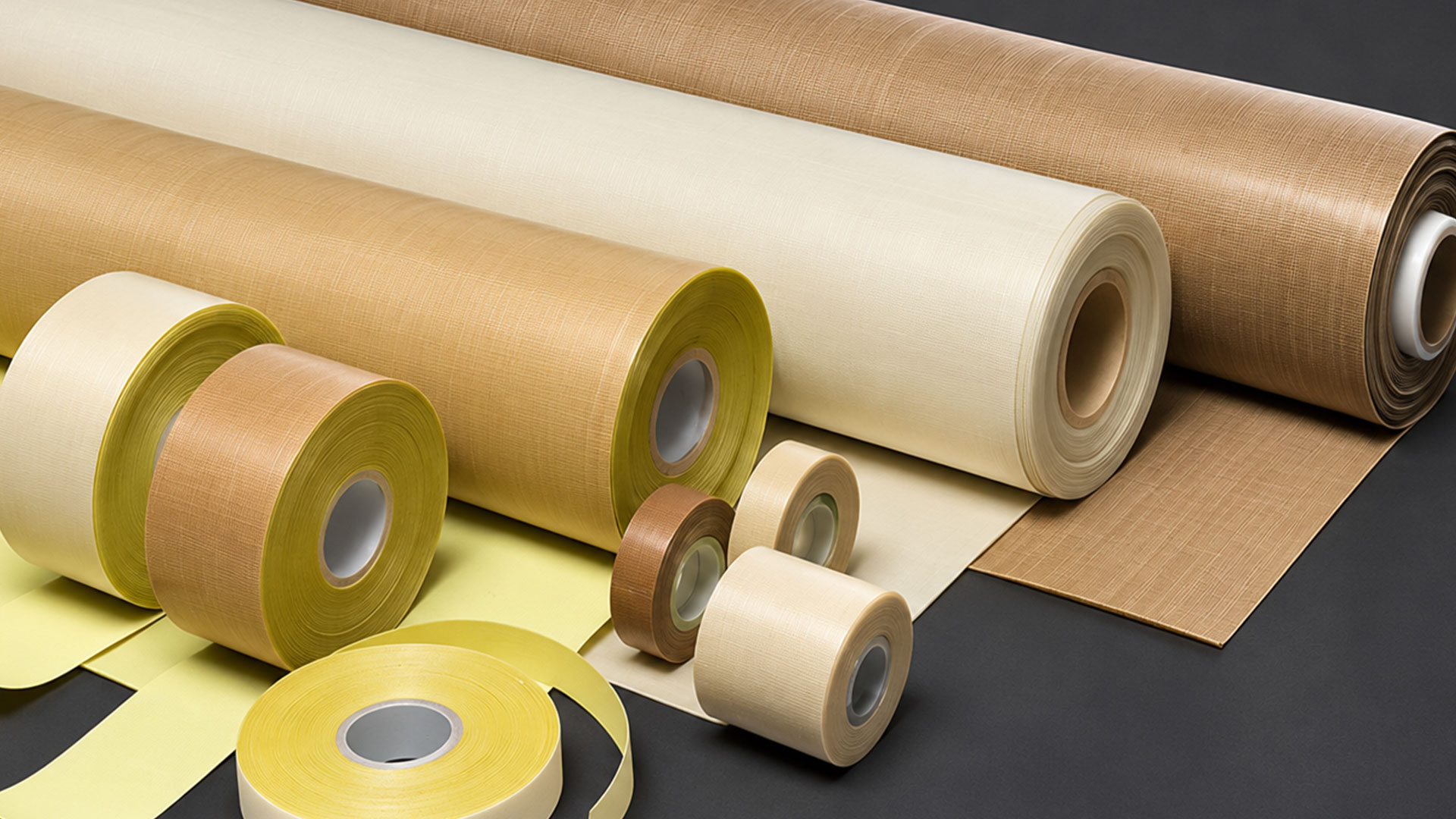
PTFE-Impregnated Fibreglass Tapes: Properties, Applications and Selection Guide
PTFE-impregnated fibreglass tapes, often called Teflon‑coated fibreglass tapes, combine the strength and dimensional stability of woven fibreglass with the low-friction, non-stick properties of PTFE. Adhesive-backed constructions can be applied to machinery and other surfaces where heat, abrasion, friction or material adhesion can affect production.
Different constructions are available depending on the operating conditions and application, including standard and premium fibreglass tape constructions. MPI Matco can help you compare adhesive systems, thicknesses, widths and converting options to find a PTFE fibreglass tape suited to your requirements.
PTFE Fibreglass Tape at a Glance
- PTFE-coated woven fibreglass construction
- Low-friction, non-stick surface
- High-temperature constructions available up to 500°F (260°C)
- Silicone and acrylic adhesive options
- Good dimensional stability and resistance to mechanical wear
- Available in standard rolls or custom converted formats
What Is PTFE-Impregnated Fibreglass Tape?
PTFE-impregnated fibreglass tape is made from woven fibreglass fabric coated with polytetrafluoroethylene (PTFE), the low-friction polymer commonly known as Teflon. The woven fabric reinforces the material, while the PTFE coating creates the release surface that comes into contact with the material being processed.
Adhesive-backed versions add a pressure-sensitive silicone or acrylic adhesive to the reverse side of the material. Some constructions are also supplied with a release liner, particularly when the tape will be converted into custom strips, shapes or die-cut parts.
Main Properties of PTFE Fibreglass Tape
PTFE fibreglass tape combines several properties that make it useful in demanding production environments
|
Low Friction & Non-Stick Performance |
High-Temperature Resistance |
Resistance to Wear |
|
Helps materials move across equipment surfaces and reduces sticking or buildup. PTFE PTFE PTFE PTFE PTFE |
Certain constructions can withstand continuous exposure to elevated temperatures, with some products rated up to 500°F (260°C). |
The fibreglass reinforcement provides greater resistance to tearing, puncture and abrasion than unsupported PTFE films. |
|
Chemical Resistance |
Dimensional Stability |
Low Moisture Absorption |
|
PTFE resists many chemicals, oils and processing fluids. |
The woven fibreglass helps the tape maintain its shape under heat and mechanical stress. |
PTFE is highly resistant to water absorption, which can be useful in humid or wet processing environments. |
Performance varies by construction, particularly when it comes to temperature range, thickness and adhesive system.
Where are PTFE Fibreglass Tapes Used?
| Application | How PTFE Fibreglass Tapes Are Used |
|---|---|
|
Heat-sealing equipment |
Applied to sealing bars and jaws to help prevent films, plastics and other materials from sticking during sealing |
|
Rollers and processing equipment |
Creates a low-friction surface that can help reduce adhesive, resin or material buildup |
|
Chutes, guide rails and sliding surfaces |
Helps reduce drag and wear where products move repeatedly across equipment |
|
Extrusion and laminating equipment |
Provides a release surface around hot or tacky materials |
|
Wear strips |
Protects contact surfaces while providing a smoother path for moving parts or materials |
|
High-temperature masking |
Selected constructions can be used during processes involving elevated temperatures |
|
Electrical applications |
Certain grades are used where heat resistance and dielectric properties are required |
PTFE Fibreglass Tapes in Food Processing & Packaging
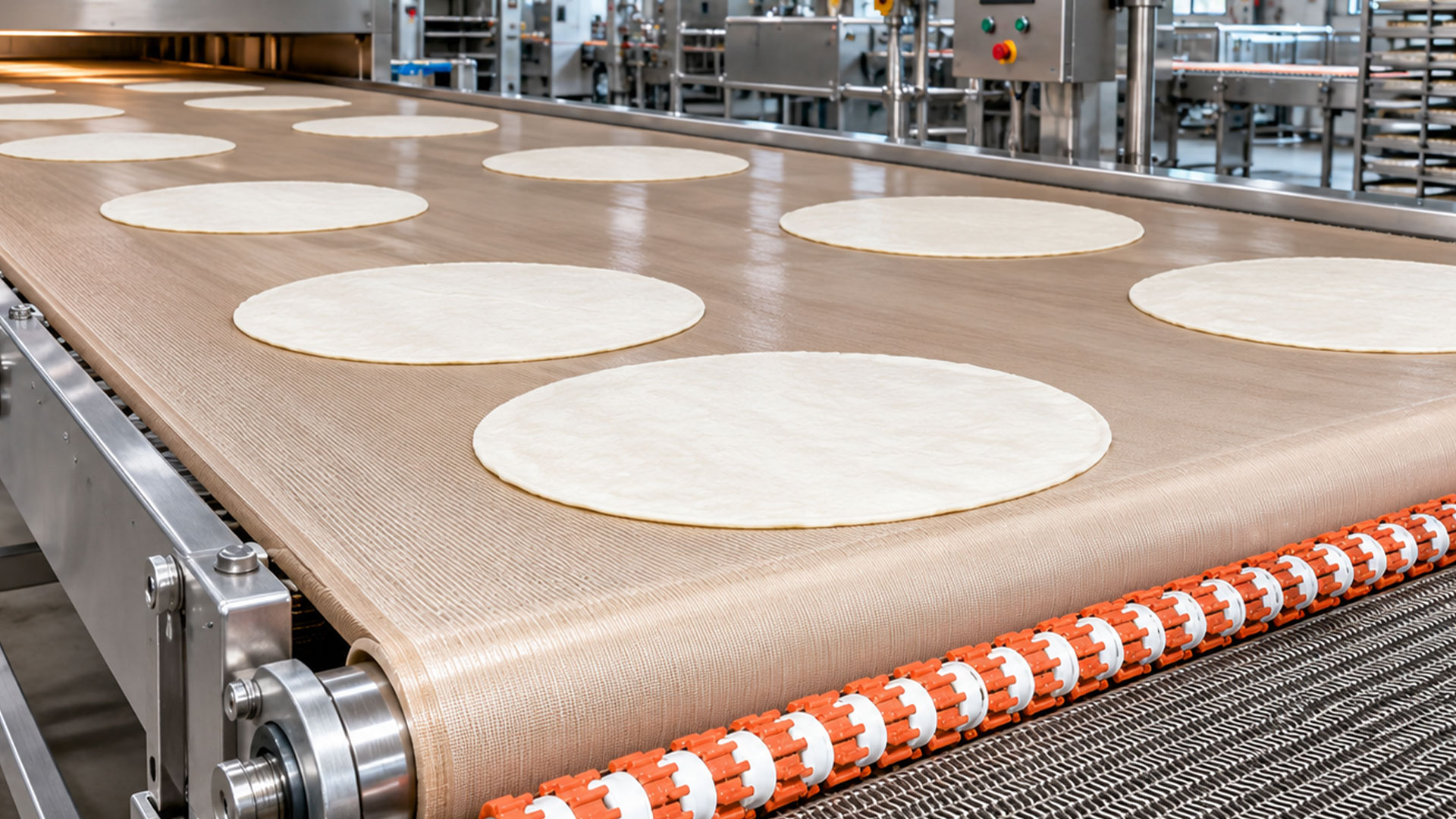
Food-processing and packaging lines often combine heat, continuous movement and materials that can adhere to equipment surfaces. PTFE-coated fibreglass adhesive tape is used in these environments to provide a durable, low-friction release surface that can help reduce sticking, buildup and wear during production.
MPI Matco can also supply the tape pre-sized to your equipment, which simplifies installation and replacement on the line.
How to Select PTFE-Impregnated Fibreglass Tape
When helping you select PTFE-coated fibreglass tape, we consider the conditions it will face in service and match those requirements to the available constructions.
Factors we consider include:
- Operating temperature: The normal working temperature and any short-term temperature peaks
- Surface: The material the adhesive will be bonded to
- Release requirements: The material that needs to move across or release from the PTFE surface
- Wear: The amount of abrasion, sliding or repeated contact involved
- Thickness: Thinner or heavier constructions depending on the required flexibility, durability and resistance to wear
- Adhesive system: Silicone or acrylic (see comparison below)
- Finished format: Standard roll, custom width, sheet, strip or die-cut part
Why Manufacturers Consult MPI Matco
Choosing the right PTFE fibreglass tape for a given application can be more challenging than you might think. MPI Matco can help you compare available constructions, test materials when needed and supply the tape in the format required for your equipment or process.
- Industrial experience since 1991: MPI Matco has decades of experience supplying adhesive tapes and engineered materials for industrial applications.
- In-house testing: Our testing capabilities can help evaluate adhesive performance, material compatibility and other application-specific requirements.
- Custom converting: We supply the tape in the width, length or shape your equipment requires.
- Access to a broad range of materials: We work with multiple adhesive technologies and constructions, so we’re not limited to a single product line.
Not sure which construction fits your process? Our team can walk you through the options.
Silicone vs. Acrylic Adhesive for PTFE Fibreglass Tapes
PTFE fibreglass tape is available with different pressure-sensitive adhesive systems. The choice between silicone and acrylic depends largely on temperature, substrate and how the tape will be used.
| Adhesive | Typical Characteristics | Common Applications |
|---|---|---|
|
Silicone |
Better suited to higher-temperature applications and repeated thermal exposure, with selected MPI Matco constructions rated from -100°F to 500°F (-73°C to 260°C). |
Heat sealing, packaging and processing equipment |
|
Acrylic |
Suited to moderate-temperature applications and applications requiring strong adhesion to many surfaces, with selected MPI Matco constructions rated from -40°F to 350°F (-40°C to 177°C). |
Chutes, wear surfaces and semi-permanent applications |
Standard and Custom PTFE Fibreglass Tape Formats
PTFE-impregnated fibreglass tape is available in standard roll sizes, but production equipment does not always match standard dimensions. With MPI-Matco’s tape converting services, we can transform the material to the width, length, or shape your application requires.
Custom converting options include:
- Slit rolls in custom widths
- Custom roll lengths
- Sheets and strips
- Die-cut parts
- Kiss-cut parts
- Parts supplied on a release liner
- Custom shapes
Supplying the tape in a production-ready format can reduce trimming and handling while improving consistency during installation.
Share the Post:
Latest Articles
Debondable Adhesive Tapes: Rethinking Bonding and Repairability in Industrial Assembly
27 October, 2026
No Comments
Read More »

How to Pick the Right Application Tape Tack Level for Your Project
18 March, 2026
No Comments
Read More »

How PTFE Mesh Belts Support Drying, Dehydration, and UV Curing Processes
20 February, 2026
No Comments
Read More »

From Concept to Production: How Custom Die Cut Tape Reduces Assembly Time
29 December, 2025
No Comments
Read More »


5 Key Factors to Consider When Selecting a Tape Converter
23 September, 2025
No Comments
Read More »
FAQ
Frequently Asked Questions
About PTFE Fibreglass Tape
PTFE fibreglass tape has a woven fibreglass reinforcement that provides greater dimensional stability and resistance to tearing, puncture and wear. PTFE film tape does not contain this reinforcement and is generally more conformable, making it useful where flexibility is more important.
No. PTFE fibreglass materials are available in adhesive-backed and non-adhesive constructions. Adhesive-backed tapes commonly use silicone or acrylic pressure-sensitive adhesives, depending on the application.
Thickness should be matched to the amount of wear, flexibility and durability required. Heavier constructions provide greater resistance to abrasion and puncture, while thinner constructions are preferred where flexibility or a lower profile is important.
Every application is different. Tell us about your operating conditions and equipment, and our team will help you find the right construction and format.